



Many city bikes and e-bikes with tires around 1.5 to 2.0 inches wide run at 44 to 65 PSI. Treat that as a starting point, not a fixed rule. The minimum and maximum pressures on the tire sidewall and the rim limit always take priority. Within that range, use slightly more pressure for extra weight or luggage and slightly less on wet or uneven roads. Measure cold tires with a pressure gauge.
Tire pressure affects rolling resistance, grip, comfort, and rim protection. On an e-bike, the full system weight matters: the bike, battery, rider, and luggage. This article gives starting ranges for each type of bike, explains which factors should guide adjustments, and shows how to measure cold tires.
Bicycle tire pressure chart: how many bar for each type of bike?
The chart gives general starting values for cold tires. Tire size, rim, construction, load, and manufacturer recommendations may call for a different range. Never exceed the limits specified for the tire or rim.
| Bike type | Tire width | General starting range* | Then adjust for |
|---|---|---|---|
| City bike | 1.5-1.9 in | 3.5-4.5 bar (51-65 PSI) | Weight, cobblestones, luggage |
| Electric city bike | 1.6-2.0 in | 3.0-4.5 bar (44-65 PSI) | System weight, range, rear wheel |
| Electric cargo bike / longtail | 1.9-2.4 in | 2.5-4.0 bar (36-58 PSI) | Load and rear tire pressure, within the tire limit |
| Road bike | 1.0-1.3 in | 5.0-7.0 bar (73-102 PSI) | Weight, rim, tubeless setup, rain |
| Gravel bike | 1.4-2.0 in | 2.5-4.0 bar (36-58 PSI) | Surface, tubeless setup, luggage |
| Mountain bike | 2.0-2.6 in | 1.5-2.5 bar (22-36 PSI) | Terrain, grip, tubeless setup |
| Children's bike | 1.4-2.2 in | 2.0-3.5 bar (29-51 PSI) | Weight and tire limit |
| Fat-bike | 3.0 in or wider | 0.5-1.5 bar (7-22 PSI) | Tire, rim, terrain, manufacturer |
How many bar should a city bike tire have?
For a city bike with tires around 1.5 to 1.9 inches wide, 51 to 65 PSI is only an editorial starting range. Check the tire and rim first. Then make small adjustments for system weight, luggage, and road surface. On cobblestones, a lower pressure within the permitted limits may improve comfort.

What tire pressure suits your tire width and weight?
The right pressure depends on four pieces of information: tire width, the permitted range shown on the tire, total system weight, and the riding surface. Wheel diameter alone leaves out the most important details. A 28-inch wheel, for example, can be fitted with tires ranging from about 1.1 to 2.0 inches wide, and different tire widths may require significantly different pressures.
Read the ETRTO size and pressure on the sidewall

The ETRTO size appears on the tire sidewall. A 37-622 tire is approximately 37 mm wide and fits a rim with a 622 mm bead seat diameter. For tire pressure, the first value is the most useful. Also look for the minimum and maximum pressure in bar or PSI. For tubeless and hookless systems, check the rim limit as well.
Adjust pressure for system weight, luggage, and child seats
Do not count only the rider. System weight includes the bike, battery, rider, bags, shopping, and any passengers. A heavier load usually requires more support from the tire. Increase the pressure only within the permitted range. A fixed rule such as “3 PSI per 22 pounds” is too crude because tire volume, rim, and weight distribution vary from bike to bike.
Should the rear tire have more pressure than the front?
Often, but not always. Distribute pressure according to the actual load on each wheel. The rear wheel carries more weight on many city bikes, while a front-loading cargo bike may need the opposite setup. Start with a small difference within the limits and check tire deformation during a test ride.
How many bar should an electric bike tire have?
For an electric city bike with tires around 1.6 to 2.0 inches wide, 44 to 65 PSI is an editorial starting range, not an official TENWAYS specification. An e-bike does not automatically need higher tire pressure than a conventional bike. Tire width and system weight together determine how much support is needed. The tire, rim, and manual set the safe limits.
Tire pressure, rolling resistance, and e-bike range
A soft tire deforms more on a smooth road. This usually increases rolling resistance, so the motor may use more energy. Excessive pressure is not the answer: the ride becomes harsher, comfort decreases, and control may suffer on wet or uneven surfaces. Instead of aiming for the highest pressure, find the lowest pressure that provides enough support without the tire squirming or bottoming out.
Tire pressure for TENWAYS models
The current product pages list different tire widths. The size helps you select the right row in the chart, but it is not an official pressure recommendation. Always check the tire fitted to your bike because components can change between editions or production runs.
| TENWAYS model | Current tire size | How to determine the pressure |
|---|---|---|
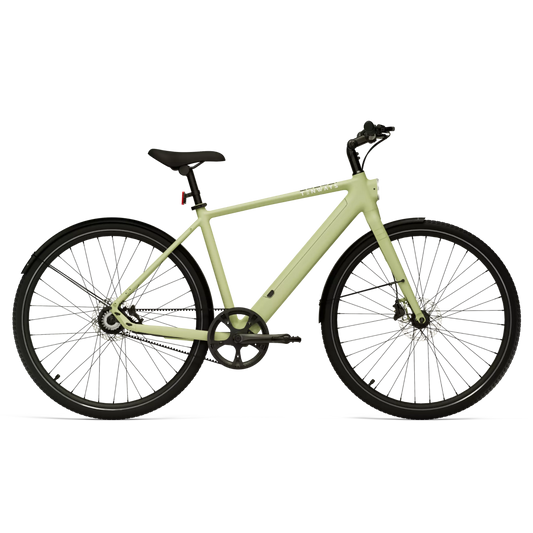
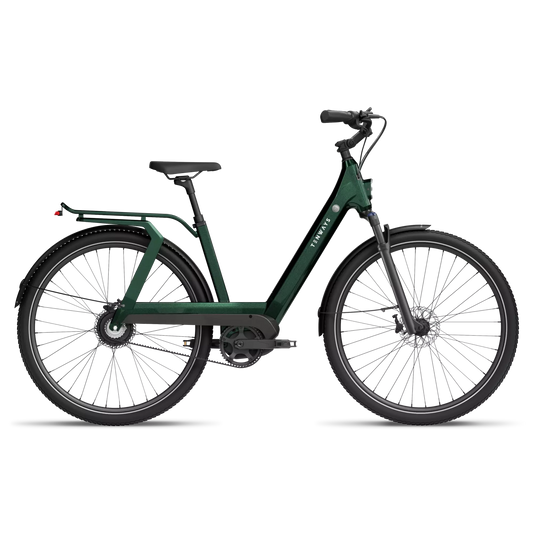
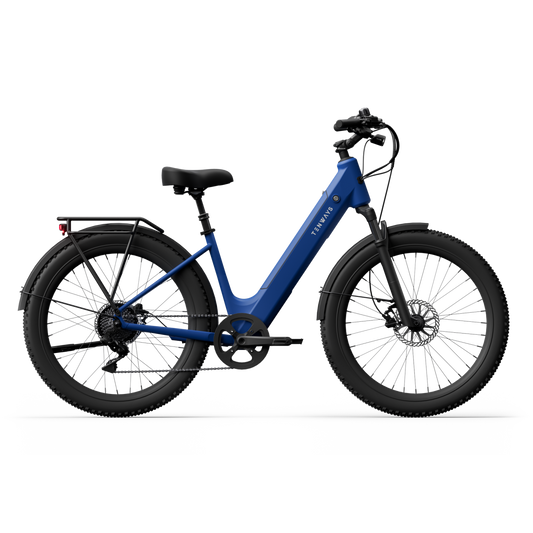
| CGO600 Pro | Pro-C | CST 700x45C | Use the e-bike row as a rough starting point; follow the values on the tire and rim. |
| CGO800S | CST 700x48C | Check the front and rear tires when cold; adjust for luggage and load. |
| AGO X | CST 700×57C | Follow the sidewall information and rim limit; account for the higher system weight. |
The listed sizes were checked on the Dutch TENWAYS product pages on 27 July 2026. They are not pressure recommendations.
How to check tire pressure and inflate a bicycle tire in 5 steps
- Measure before you ride. Cold tires give the most reliable comparison with your chosen starting value.
- Read the tire size and permitted pressure range in bar or PSI from the sidewall. Check the rim and manual as well.
- Connect a pump or pressure gauge squarely to the valve. If necessary, use the correct adapter for a Dunlop, Presta, or Schrader valve.
- Inflate gradually to your chosen starting value. Set the rear tire slightly higher if it clearly carries more load.
- Take a short test ride. Add air if the tire squirms or compresses too far; release a small amount if the bike bounces harshly or loses grip. Stay within all limits.
Tire pressure too low or too high: symptoms and risks
Ride feel can tell you a lot, but not enough to determine the exact pressure. Treat the signs below as prompts to take a measurement.
| Sign | Likely cause | What to do |
|---|---|---|
| Tire squirms in corners or compresses too far | Probably too low | Measure and add air within the permitted range. |
| Rim hits a sharp edge or the tire gets pinch flats | Insufficient support | Check the tire, inner tube, and rim; increase the pressure if it is safe to do so. |
| Bike bounces on cobblestones and feels unnecessarily harsh | Possibly too high | Reduce the pressure slightly and take another test ride. |
| Pressure drops quickly or repeatedly | Puncture, valve problem, or damage | Inspect and repair the problem; do not just keep adding air. |
Adjusting tire pressure for road surface, rain, winter, and temperature
Adjust the pressure only when conditions justify it. There is no need to correct a difference you cannot feel or measure.
- Smooth, dry asphalt: start with the value you selected earlier. Increase it only in small steps if the tire deforms too much or feels unstable; maximum pressure is not a performance target.
- Cobblestones, gravel, or wet roads: slightly lower pressure may improve grip and comfort. Reduce it in small steps and make sure the tire does not bottom out or make the steering unstable.
- Cold weather or rapid temperature changes: measure again when the tires are cold. Return the pressure to your usual target instead of adding or releasing air without measuring.
Convert bar to PSI
One bar is approximately 14.5 PSI. Multiply bar by 14.5 to get PSI; divide PSI by 14.5 to get bar.
| Bar | Approx. PSI |
|---|---|
| 1.0 bar | 15 PSI |
| 1.5 bar | 22 PSI |
| 2.0 bar | 29 PSI |
| 2.5 bar | 36 PSI |
| 3.0 bar | 44 PSI |
| 3.5 bar | 51 PSI |
| 4.0 bar | 58 PSI |
| 4.5 bar | 65 PSI |
| 5.0 bar | 73 PSI |
| 7.0 bar | 102 PSI |

How often should you check bicycle tire pressure?
Check the pressure at least once a month, as well as before a long ride, after extended storage, or following a noticeable temperature change. Narrow high-pressure tires and latex inner tubes lose pressure faster and need more frequent checks. The thumb test is not accurate enough: reinforced e-bike tires can feel firm even when the pressure is too low.
Make tire checks part of your regular maintenance routine. The TENWAYS electric bike maintenance guide also covers brakes, the drivetrain, battery, and lights.
Frequently asked questions about bicycle tire pressure
Is 3 bar a lot for a bicycle tire?
That depends on tire width. Three bar may be normal for a wide e-bike, city bike, or mountain bike tire, but too low for a narrow road bike tire. Check the size and permitted range on the sidewall.
How many bar should a 28-inch bicycle tire have?
Twenty-eight inches mainly describes wheel diameter and is not enough to determine pressure. Find the tire width or ETRTO size as well, such as 37-622 or 47-622, then use the range shown on the sidewall.
Where is the correct pressure shown on a bicycle tire?
The sidewall usually shows a minimum and maximum in bar and/or PSI. The markings may be embossed. Check the rim limit as well, especially with tubeless or hookless systems.
How does low tire pressure affect e-bike range?
A soft tire deforms more and usually increases rolling resistance on a smooth road. The motor then has to work harder, which may increase energy use. An exact percentage is meaningful only when tested under controlled conditions.
Can I check bicycle tire pressure with my thumb?
Only as a rough warning. Reinforced tires can feel firm even when the pressure is too low. For a reliable reading, use a pump or gauge with a manometer and measure when the tires are cold.
Do tubeless tires use the same pressure?
Not always. Tubeless systems can often run at slightly lower pressure, but the safe value depends on the tire, rim, internal rim width, total weight, and manufacturer. Check the limits for every component.
Looking for an e-bike for daily use? View TENWAYS electric bikes and compare tire width, weight, and intended use.


